
By: TONY MARKS
Editor
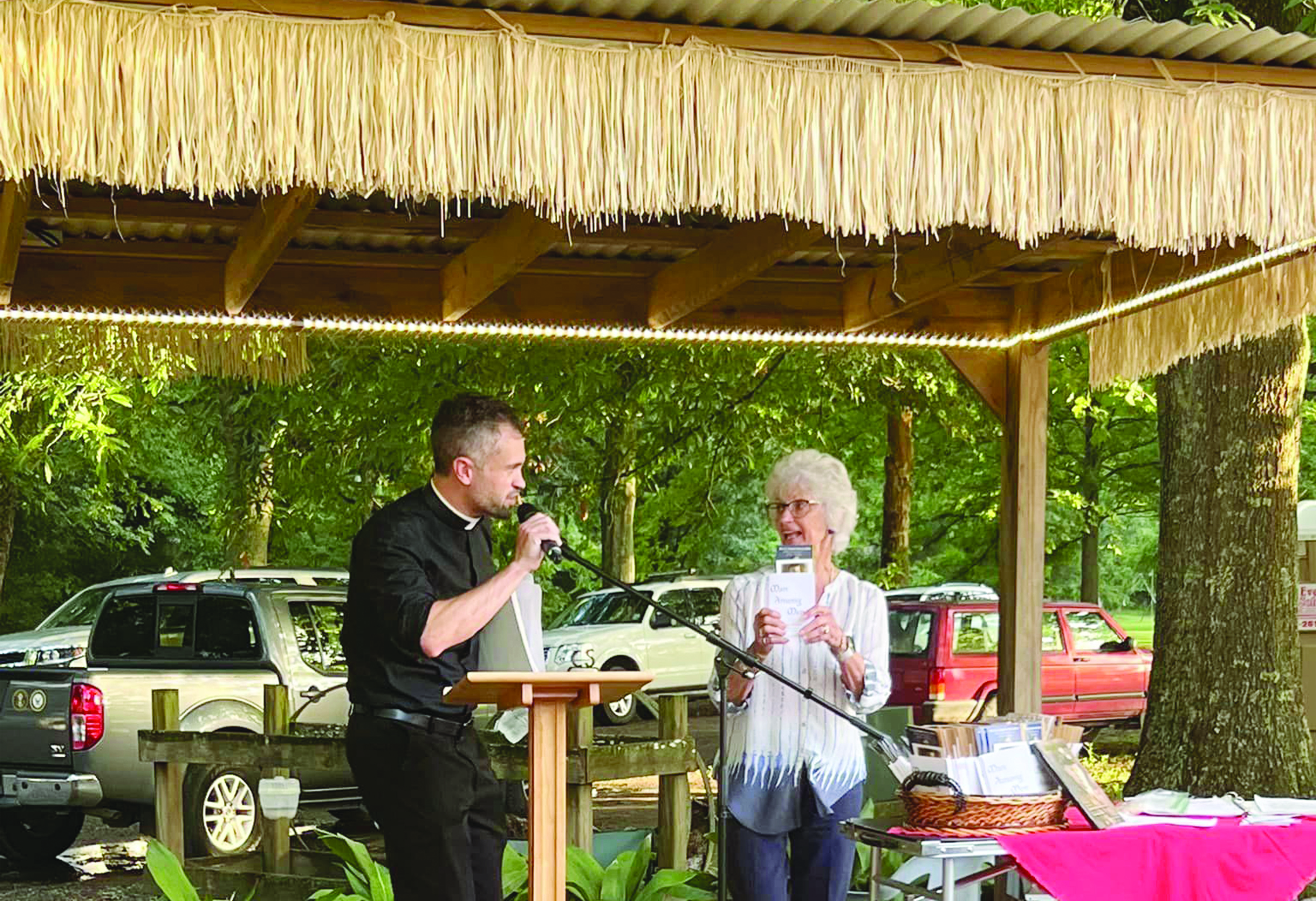
ARNAUDVILLE - The Theology on the Bayou series returned to Bayou Teche Brewery this summer, and the talks are centered around the three residents of South Louisiana, Fr. Verbis LaFleur, Auguste “Nonco” Pelafigue, and Charlene Richard, who have been declared servants of God after having their causes of canonization opened by the Diocese of Lafayette.
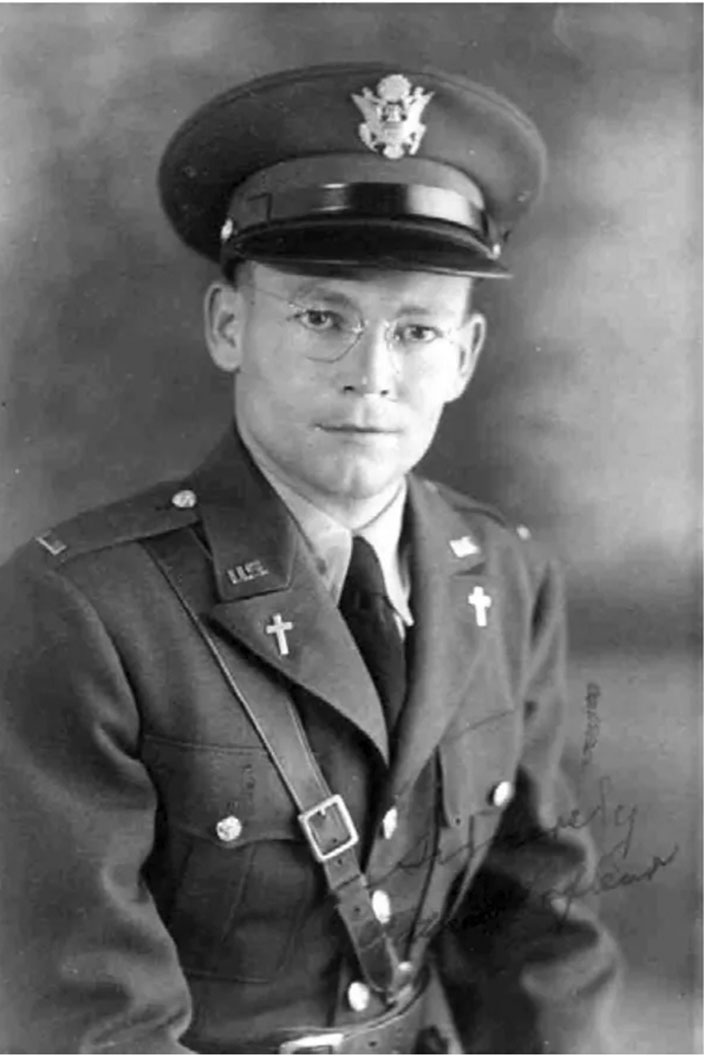
At the latest talk, held Friday, July 7, Carrol LaFleur shared information on her husband Richard’s uncle, Fr. LaFleur.
According to Carrol, Fr. LaFleur was born in Ville Platte on January 24, 1912, to Valentine and Agatha LaFleur and was one of eight children. He received the Sacraments of Initiation at Sacred of Heart of Jesus Catholic Church in Ville Platte and was an alter server with a strong desire to become a priest.
“In those days,” Carrol said, “all of the priests in this area were foreigners, and, unfortunately, those priests did not believe the Cajuns were smart enough to go through the schooling required to become a priest. So, the priest there did not pay attention to young Verbis’ pleas of wanting to go into the seminary.”
After the Great Depression began, according to Carrol, Fr. LaFleur’s father abandoned the family and moved to New Orleans. At the request of the eldest child, Olivia, Fr. LaFleur’s mother moved the family to Opelousas.
Fr. LaFleur then became an alter server at St. Landry Catholic Church and persuaded the monsignor to help him enter the seminary.
Carrol said, “Fr. LaFleur was finally able to enter in St. Ben’s in Covington. Once he completed his studies there, he went to New Orleans to Notre Dame Seminary.”
Bishop Jules Jeanmard, of the Diocese of Lafayette, ordained Fr. LaFleur on April 2, 1938. The newly ordained priest celebrated his first Mass at St. Landry in Opelousas on April 5, and was assigned to St. Mary Magdalene Catholic Church in Abbeville.
“War was brewing in Europe,” Carrol said, “and Fr. LaFleur always loved history. He had a yearning to become a chaplain.”
Fr. LaFleur was able to convince Bishop Jeanmard to allow him to become a chaplain. “He wanted to be there for the men who were being drafted and had no choice,” said Carrol.
In July 1941, Fr. LaFleur was allowed to become a chaplain and left for Albuquerque, N.M.,to join the 19th Bombardment Group. As Carrol explained, Fr. LaFleur and his unit were sent to California immediately after basic training to board a ship bound for the Philippines.
“When they arrived,” Carrol said, “Fr. LaFleur was assigned to Clark Field, which was not very far from Manila.”
The Japanese, on the day following the Pearl Harbor bombing, attacked Clark Field. Because of his actions that day tending to the rest of his troops, Fr. LaFleur, according to Carrol, received the Distinguished Service Cross.
After the bombing of Clark Field, Fr. LaFleur and his troops were shipped around to different islands before ending up at Mindanao.
Ultimately, Fr. LaFleur and others were captured by the Japanese and became a prisoner of war. Carrol explained these POWs were forced to work in prison camps in the Philippines for two and a half years.
While in the camp at Davao, Fr. LaFleur constructed a chapel he named St. Peter in Chains. While there, according to Carrol, Fr. LaFleur was able to convert hundreds of fellow POWs to Catholicism.
As time went on, Fr. LaFleur volunteered to take someone’s place on a work detail in the jungle. Carrol said the work to be done was “to clear out land for an extension to an air strip.”
Seven hundred fifty POWs, including Fr. LaFleur, were loaded onto a freighter that, according to Carrol, was not marked as having American POWs on board. The American submarine, USS Paddle, torpedoed the ship twice.
“The men immediately told Fr. LaFleur they wanted him to hear their confessions,” Carrol said. “He said there was no time, but he gave them all an absolution and started helping the men out of the ship. They wanted him go first, but he didn’t. Fr. LaFleur lost his life aboard that ship” on September 7, 1944.
Carrol went on to say, “We are so blessed here in the Diocese of Lafayette to have three causes for sainthood, and, I think, it just goes to show the great faith that the people of in South Louisiana have, the great Catholic faith that they have. I hope the process for these three causes will increase this faith and make it grow and spread like wildfire.”
In his opening remarks, Fr. Travis Abadie, pastor of St. Francis Regis Catholic Church in Arnaudville, said, “When we think of pilgrimages, we think of The Holy Land, Lourdes, Fatima, and all these cities way over there across the Atlantic Ocean. We never think about the United States much less right here in Acadiana.”
He continued, “Over the last few years, something amazing has been happening. Pilgrims have been coming right here to Acadiana. That is mind blowing, amazing, and truly historic. Over the last few years, the Diocese of Lafayette has opened three causes for canonization reminding us that saints can and are made right here along the Bayou Teche.”
The next talk is scheduled for Friday, July 21, and will be on Pelafigue. The final talk, on Richard, will be on Friday, August 4. All talks begin at 6:30 p.m.
- Log in or Subscribe to post comments.