
The water cycle is a critical part of nature because of its importance in the role of growing and sustaining life. This cycle involves water evaporating and traveling into the atmosphere where it cools in the clouds and turns into rain before falling back to earth.
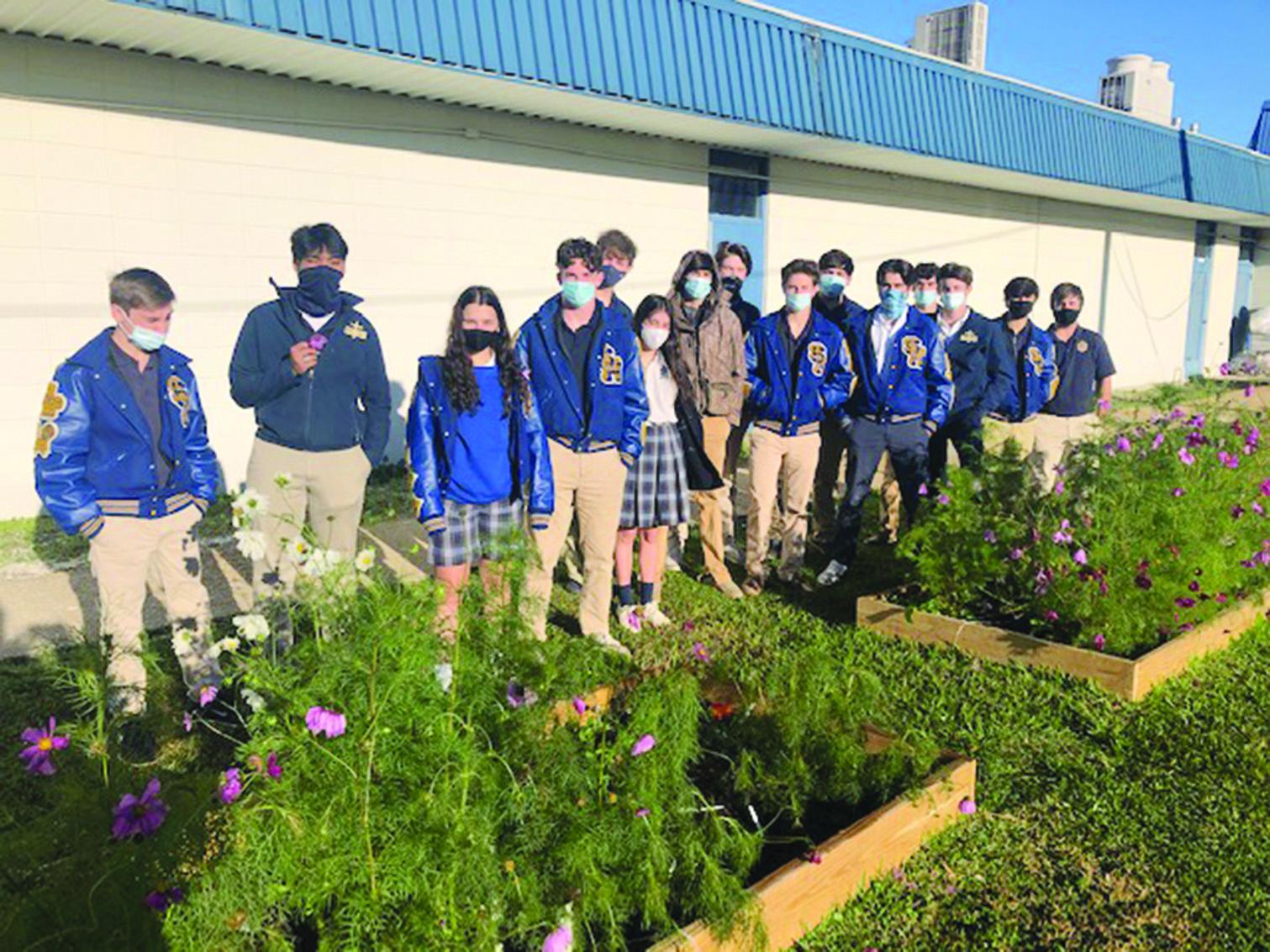
Several Sacred Heart students are getting a hands on lesson in the water cycle and other topics including the chemical composition of soil in Sarah Montelaro’s environmental science class.
Montelaro’s idea sprouted from her own love of planting. “I wanted to get them outside and not just doing stuff in the books,” she said. “I figured hands on things of growing plants was a good idea. Some of them know about farming because their parents or friends are farmers, but a lot of them never actually grew something on their own.”
She continued, “I figured it was a good hands on experience where they can learn about the ecosystem and the benefits of growing their own plants without pesticides and herbicides. And, they learn about the nutrients in the soil and composting.”
Montelaro said the garden is growing well and the students have already collected batches of produce. The students also planted flowers to, as she said, “attract bees and different pollinating things.”
One of the students who planted such flowers was Ethan Fontenot who planted a patch of cosmos. “They attract bees to pollinate our other plants,” he said.
Fontenot grew up on a farm where he learned lessons such as, “If you don’t take care of your plants, then you’re not going to get any yield.”
Other students, like Lillian Vallet, grew bathes of produce. “I liked it because we got to come outside and mess with the plants,” she said.
Vallet grew radishes, lettuce, and spinach. “At first,” she said, “nothing grew. We replanted everything, and most of it popped up.”
For Vallet, she learned about having to “watch how the weather changes and how you have to water the plants.”
Matthew Ardoin also planted a batch of radishes and lettuce along with flowers. He said he and his family grow peppers at their house.
Through his home pepper growing and the class project, Ardoin said he learned “the soil types that grow all of this is one key thing.”
As for the soil used at Sacred Heart, Ardoin said the students added fruit to it for the decomposition benefits. He went on to say the soil is “mostly topsoil made out of nutrients and bugs to give it some more power.”
Also growing spinach, radishes, lettuce, and flowers along with arugula was Kara Kennard. She expressed, “It’s fun because we got out of class a lot. We’d come do this every morning and check on the plants and water them.”
“At the beginning,” she continued, “we learned about phosphorus, nitrogen, and the water cycle and how the plants are all producers of all of those things. We also learned how the air worked with the plants we were growing.”
Montelaro said she got to see her students grow in the process of watching their plants come out of the soil. She said, “They got very stressed out because nothing was growing. They’d come out here and water it every day.”
“But,” she concluded,” they got really excited when everything started growing. It’s rewarding to see them excited about something.”
Organic Trojans
Sacred Heart students use hands on approach in environmental science