
By: TONY MARKS
Editor
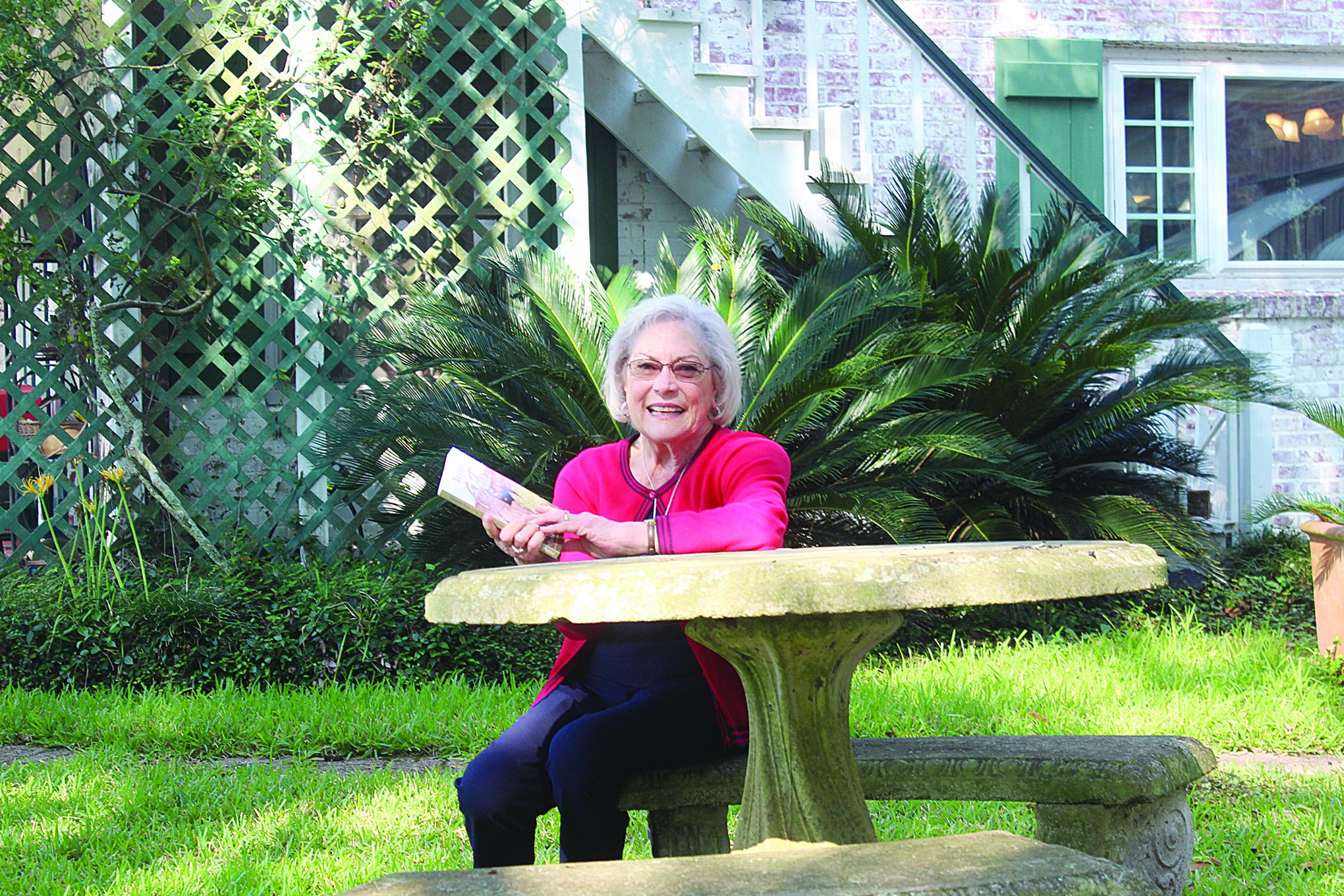
Harper Lee’s To Kill a Mockingbird is a classic novel about growing up in the South during the early decades of the 20th Century and is a reflection of many others with similar experiences in the region. One of those with such similar experiences is Ville Platte native Susan Dupre LaHaye.
LaHaye grew up in a family with six children and numerous cousins in the vicinity of the old Ville Platte hospital. “My grandmother had seven children, and they all lived within six blocks of her,” she said. “We grew up not in my parents’ backyard but in all of that area. After school, we’d ride our bikes, and it was so safe.”
However, the Dupre cousins would not ride past one house in particular, and that is where the connection to the novel comes in.
“In To Kill a Mockingbird,” LaHaye said, “there is a strange man, Boo Radley. We had a man like that. He lived on the corner where my mother’s house is. It’s the little brick house on the corner behind (my brother) Henry’s. That was an old Mrs. Hardy, and she had a child like Boo Radley. We never rode our bikes that way. He’d walk around in the yard with a hat on, and he’d wear a khaki shirt and khaki pants. He always had the same clothes on, and his name was Lynn.”
She continued, “I’m in To Kill a Mockingbird. It’s my experience and my life as a child.”
Besides having a connection to Lee’s novel, LaHaye has always had a deep literary connection. Her father, Ellis Dupre, taught at a one-room school in Beaver Creek and always quoted poetry. “It’s like it made me want to major in English and made me love written words,” said LaHaye.
She went on to major in Enlgish and teach English at the high school level. She also compiled different written memories and meditations throughout her life. Now, at the age of 80, she has decided, at the urging of her granddaughter, Jordan, to compile all of her writings into a book.
The book is divided into different sections beginning with a section of memoirs and a section of home made bread recipes. It then goes into a section of poems inspired by LaHaye’s father.
“It tickles me when I think about poetry, and how people don’t relate to poetry,” she said. “But, my dad loved poetry. I learned Longfellow’s Psalm of Life for (my dad) for Christmas when I was about 16. That was his Christmas present.”
The book then goes into meditations on the Passion of Jesus that LaHaye wrote while taking spiritual direction courses in Grand Coteau, which she called “holy ground.” She added, “I trained there as a spiritual director, and it was a wonderful time of my life. It was a three year training, so I spent a lot of time and mediation over the passion.”
The next section of the book is called The Communion of Saints and is a collection of writings on different people in LaHaye’s life. One is on Aubrey LaHaye that she wrote when he was chosen Man of the Year in Mamou. Another is a dramatic monologue of God speaking to LaHaye’s 93-year-old mother-in-law.
The biggest part of that section contains eulogies. “I liked writing eulogies,” LaHaye said. “That’s what made me want to write this book and give it to my children. I thought they’re not going to read a bunch of papers. I needed to put it in a book. Then, it expanded because I wanted my children to have the eulogies I wrote about people we love.”
Two of the eulogies were written for men, Ford and Herman, who worked for the family. “Ford was a black man who worked for my dad from the time he was a teenager,” LaHaye said. “Henry (her brother) had been asked to make a statement about Ford, and he called me to do it. I woke up on the morning of the funeral and wrote a very beautiful eulogy because that man was a part of our life.”
She continued, “When a person lives and it’s all goodness and there’s nothing bad you can think about, it is special. He was with us a lot of hours. He drove us to school, and he drove us to dancing in Lafayette. I’ve had some wonderful people in my life both black and white, and it’s such a blessing. You can’t be prejudiced. It’s different if you experience goodness from a black person, and you have to trust black people. Those experiences are so precious to me.”
Other stories in the Communion of Saints section are on a variety of people in her life including her husband, Wayne. There is one on Fr. Brennan called an Irishman in Acadiana in the Year of the Priesthood. There is another on LaHaye’s older brother, Johnny.
“My sister-in-law remarried after Johnny passed away,” LaHaye expressed. “Her husband said his kids don’t know him because they were divorced and that they needed to know about him. He told me to write something about Johnny for those kids.”
Another story is The Gift of a Very Special Teacher about Verna Demourelle. “She was a blind music teacher who taught music,” said LaHaye. “She taught my grandchildren piano.
And, there is one about George Hollier from Mamou who was a woodworker.
The book also contains spiritual writings such as a Paraphrase of Psalm 23 and Who Are You, Holy Spirit, Do I Know You?
There are also stories about LaHaye’s Cajun grandmothers. As she said, “We are so blessed to be in this place. We have a unique culture, and, I think women in Catholic culture can be feminine and glory in it. In a lot of places, that’s not the case.”
The book can be ordered online through the publisher Life Rich Publishing or through LaHaye’s granddaughter, Jordan.
LaHaye hopes the book can provide strength for families today. She concluded, “Families have such a hard time today. It’s hard to raise kids and get them to be ok. There are so many bad things out there that weigh them down and give them trouble. It’s a struggle to raise good kids today because of all the bad things that are out there that were not there.”