
By: TONY MARKS
Editor
Travelers going down the Turkey Creek Highway toward Lake Cove on their way to Glenmora can catch a glimpse of a gravel pit, which was once a thriving business in the area.
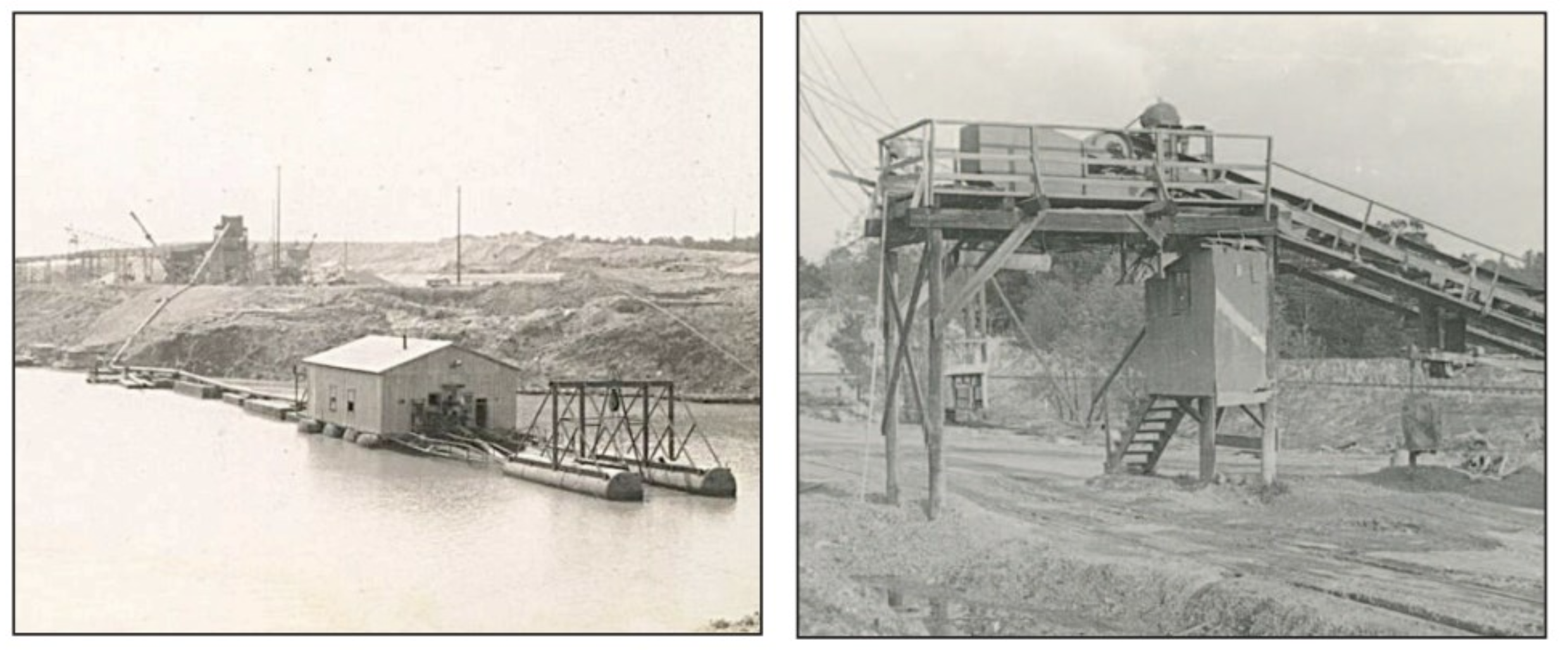
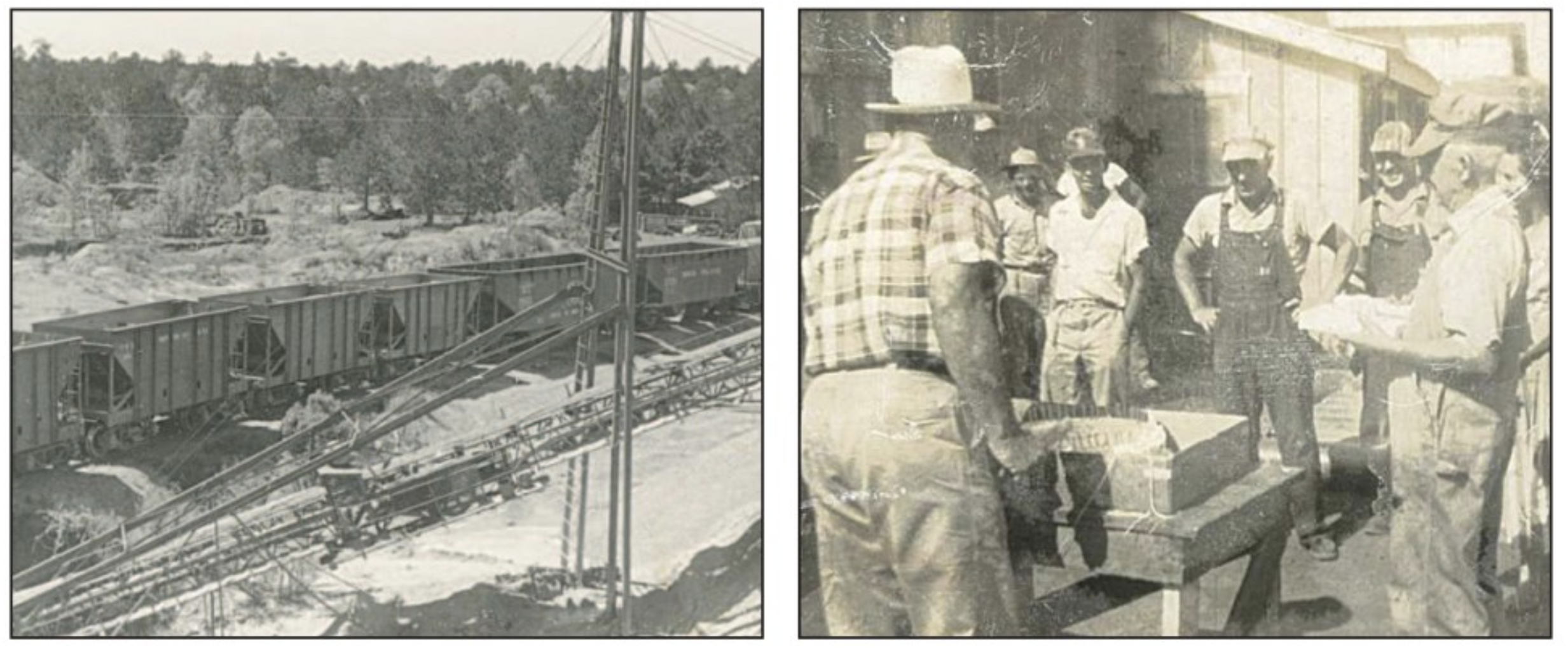
Recently, a reader of this newspaper shared some pictures of the gravel pit that he found in an old home. The pictures show such things as the Contract 8 Washing Plant, the Lima machine with P and H in the background, sand cars that JJ Perry ran, and loading train cars at Contract 9.
Terry King, an 80-year-old resident of the area, is the son of Wesley King. He remembers his father working at the gravel pit.
“My daddy was a contractor,” King shared. “He had trucks working at the pit.”
King recalled the heavy machinery including the bulldozers, pumps, and floating barges that were used to extract the sand and gravel.
From the gravel pit, according to King, sand and gravel were shipped by rail to Meridian. From there, the cargo was then shipped by rail to any location in the country.
King also recalled how the gravel pit was a “big plus” for this area. He said, “Everybody worked there.”
The gravel pit is part of a larger story of commerce in the northern part of the parish. Devonna Deville, who wrote a series of columns for the Ville Platte Gazette in the late 1980s and early 1990s, once recalled a visit with Robert Bennett.
In the visit, Bennett recalled some of his memories of the sawmill in Meridian.
According to one of Deville’s columns dated October 27, 1988, Bennett said, “he was only 10 years old when the sawmill burned in 1926. His dad was a foreman over the mill pond, and he visited him often. The train would come in from the north end of the pond and move along the top of the east side levee. The train would dump its logs into the pond.”
Bennett, in the column, continued, “The mill was built in 1911 and employed approximately 600 men. In those days, it was a little segregated city about one mile square.”
Later Deville’s column, Bennett also shared, “Meridian was composed of a commissary, theatre, ice house, barber shop, depot, pressing shop, and a doctor’s office. (He) remembered the doctors’ names. ‘The first was Dr. Livingston and the other was Dr. Archibold,’ he said. ‘They even had a police chief. And they had a school. It was located northwest of the old Messer
Road.’”
The mill and “city” were owned by the Crowells, known as Crowell and Spencer Co. Ltd, according to Deville’s column.
Deville went on to write, “Mr. Bennett related that when the mill burned in 1926, ‘We could see the flame from where we lived and our home was about two miles south of Meridian. The northern skies were flaming red,’ he said with excitement.”
“‘The next day, all of the jobs were gone. Some men transferred to Alco, La. while others looked elsewhere for jobs.’”
“‘Then, the depression came. One by one the houses were moved bricks hauled away and slowly the city had gone,’ he summed up his story with sadness.”
- Log in or Subscribe to post comments.